
Why a Small Group Bible Study Could Be the Most Important Step in Your Faith Journey
Small group Bible study is one of the most effective ways to grow spiritually, build lasting relationships, and experience the transforming power of God’s Word in community.
Here are the most popular types of small group Bible studies to get you started:
- Topical studies – Focus on a specific theme like prayer, holiness, or discipleship
- Book studies – Walk through a single book of the Bible verse by verse
- Character studies – Examine the lives of biblical figures for practical lessons
- Doctrinal studies – Explore foundational truths like the name of Jesus in baptism and the gift of the Holy Ghost
- Video-based studies – Combine guided video teaching with group discussion
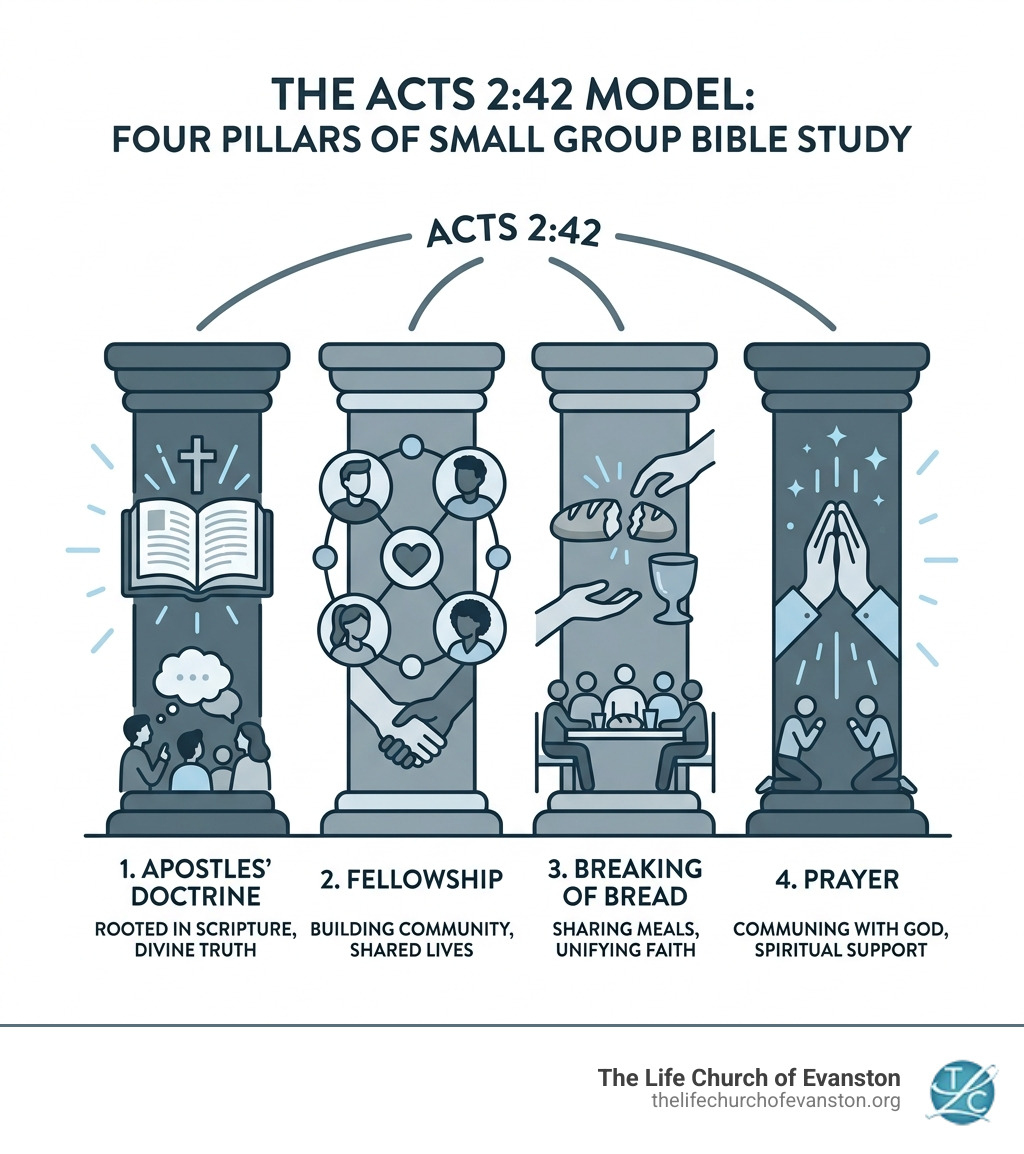
The Bible makes it clear that believers were never meant to walk alone. Acts 2:42 describes the early church devoted to the apostles’ doctrine, fellowship, breaking of bread, and prayer — a pattern that looks a lot like what happens in a healthy small group today.
Whether you are brand new to the faith or have been walking with God for years, there is a small group that can help you go deeper.
I’m Anthony LoCascio, pastor of The Life Church of Evanston and founder of Transformation Bible Institute, and I have spent years developing and leading small group Bible studies that combine sound Apostolic doctrine with real-life discipleship. In this guide, I will walk you through everything you need to know to find, join, or lead a small group that produces lasting transformation.
The Biblical Foundation of the Small Group Bible
To understand the power of a Small group Bible study, we must look at the blueprint left by the first-century church. In April 2026, as we navigate a world that often feels disconnected, the ancient model of the Book of Acts is more relevant than ever. The early believers didn’t just attend a weekly service; they lived their lives in a beautiful rhythm of corporate worship and intimate, house-to-house fellowship.
The cornerstone of this movement is found in Acts 2:42-47. The Scripture records that they continued steadfastly in the Apostles’ Doctrine. In our Apostolic tradition, this means adhering to the absolute Scriptural Authority of the Word of God. We believe in the oneness of God—that there is only one God who manifested Himself in the flesh as Jesus Christ—and this truth was the heartbeat of their discussions.
They were “breaking bread from house to house,” showing that the home is a sanctified space for learning. This “house-to-house” ministry allowed for a level of transparency and questions that a large crowd simply cannot provide. Furthermore, Hebrews 10:25 admonishes us not to forsake the assembling of ourselves together. This isn’t just a suggestion; it is a command for mutual encouragement. When we meet in a Small group Bible setting, we are fulfilling the biblical mandate to provoke one another unto love and good works.
Spiritual Growth Through a Small Group Bible Study
Why is a Small group Bible study so vital for your walk with God? It comes down to the principle of “iron sharpening iron” (Proverbs 27:17). While personal Bible Study is the foundation of a believer’s life, the group setting introduces accountability that keeps us on the straight and narrow path.

In a small group, you aren’t just a face in a pew; you are a brother or sister in Christ whose growth matters to the person sitting next to you. This environment fosters true discipleship. It is where the “milk” of the Word becomes “strong meat.” As we discuss the Word, our faith is built up. We see personal transformation happen in real-time as the Spirit of God convict’s hearts and brings revelation. Whether we are discussing the necessity of repentance or the beauty of holiness, the collective focus on the Word creates an atmosphere where spiritual maturity is accelerated.
Fostering Apostolic Community and Prayer
One of the greatest benefits of the Small group Bible format is the development of a powerful prayer life. In Acts 12:5, we see a prime example: “Peter therefore was kept in prison: but prayer was made without ceasing of the church unto God for him.” This wasn’t just a general prayer; it was a focused, corporate intercession that resulted in a miraculous deliverance.
When you are part of an Apostolic Small Group, you have a team ready to bear your burdens. If you are facing a trial, you don’t have to face it alone. There is a unique “Holy Ghost power” that is released when two or three are gathered in His name with one accord. This unity is what the Lord honors. In these settings, we pray for the sick, we seek the infilling of the Holy Ghost for new seekers, and we celebrate the victories God gives us. It is the womb of the church where miracles are often conceived through fervent, united prayer.
Structuring Your Small Group for Maximum Impact
For a Small group Bible study to be effective, it needs a healthy structure. It isn’t just a social club; it is a focused time of spiritual labor. Research and experience show that the “sweet spot” for group size is 6 to 12 people. This allows everyone to have a voice without the conversation becoming unwieldy. When a group grows beyond 12, it often loses the intimacy required for deep heart application.
A typical session should last between 45 and 75 minutes. This provides enough time for a “Launch” (an icebreaker or opening thought), “Exploration” (diving into the Scriptures), and “Application” (how do we live this out tomorrow?).
To help you understand the difference between your private time with God and these communal gatherings, consider this comparison:
TABLE: Personal Bible Study vs. Small Group Bible Study
| Feature | Personal Bible Study | Small Group Bible Study |
|---|---|---|
| Primary Focus | Personal devotion and intimacy | Community growth and mutual edification |
| Method | Individual reading and meditation | Discussion, questions, and shared insights |
| Accountability | Self-discipline | Peer encouragement and group support |
| Prayer | Individual petitions | Corporate intercession and bearing burdens |
| Perspective | Single viewpoint (yours) | Multiple perspectives from diverse believers |
Leading a Spirit-Led Small Group Bible Session
Leading a Small group Bible study is a sacred trust. It’s not about having a PhD in theology; it’s about being a Spirit-filled facilitator who can point people to Jesus. Whether you are leading a group of adults or using a Teen Bible Study Ultimate Guide, the goal remains the same: exalt the Word of God.
A successful leader doesn’t dominate the conversation. Instead, they ask questions that require more than a “yes” or “no” answer. They create a safe space where a new convert feels just as comfortable sharing as a seasoned saint. Most importantly, a leader must ensure that the group stays grounded in Biblical Truth. If the conversation drifts into personal opinions that contradict the Apostles’ Doctrine, the leader must gently but firmly steer the group back to “Thus saith the Lord.”
Effective Facilitation of a Small Group Bible Lesson
Facilitation is an art. It involves active listening—hearing not just the words being said, but the heart behind them. When someone asks a difficult question, a good facilitator doesn’t always provide the answer immediately. Often, the best approach is to ask, “What does the Scripture say about that?” This encourages everyone to search the Word.
Preparation is key. You should spend time in prayer long before the group arrives, asking the Holy Ghost to give you a “Gospel-centered focus.” Every lesson, whether it’s on the Old Testament tabernacle or the Epistles, should eventually point back to the redemptive work of Jesus Christ. When the group sees Jesus at the center of every text, life change is inevitable.
Overcoming Common Group Challenges
No group is perfect. You will encounter challenges like inconsistent attendance, “over-talkers” who dominate the discussion, or even spiritual warfare that tries to sow discord. Consistency is the backbone of a group; encourage members to prioritize this time as an appointment with God.
If a conflict arises, handle it according to the biblical pattern of Matthew 18—with love, privacy, and a goal of restoration. Maintaining unity is paramount because the Spirit of God flows where there is oneness. For the timid members, a gentle “Sister Sarah, what are your thoughts on this verse?” can help them find their voice and realize that their contribution is valued by the body.
Finding Your Place in an Apostolic Small Group
At The Life Church of Evanston, we believe that Small group Bible studies—which we call Life Groups—are the primary engine for evangelism and discipleship. It is much easier to invite a neighbor to a comfortable living room for a Life Groups session than it might be to get them to a formal church building for the first time.
When you Join a Life Group, you aren’t just joining a meeting; you are finding a spiritual home. You are connecting with a multicultural community in the Evanston and North Shore IL area that is dedicated to seeing you walk in the fullness of God’s plan. This is where the Great Commission happens—one conversation at a time, one soul at a time.
Frequently Asked Questions about Small Group Bible Studies
How do small groups support the Apostolic plan of salvation?
In our small groups, we don’t shy away from the foundational message of Acts 2:38. We believe that for a person to be born again, they must experience repentance, be baptized by full immersion in the name of Jesus Christ for the remission of sins, and receive the gift of the Holy Ghost with the initial evidence of speaking in tongues. Small groups provide a non-threatening environment to explain why we baptize in Jesus’ name and to pray with seekers until they receive the promise of the Spirit.
What is the ideal size for a small group?
As mentioned earlier, 6 to 12 members is the ideal range. This size preserves the intimacy needed for relationship building while ensuring there are enough voices to keep the discussion lively and diverse. It allows the facilitator to keep track of everyone’s spiritual well-being effectively.
Can any Spirit-filled believer lead a small group?
While the church leadership provides oversight and training, we believe that any Spirit-filled believer who is walking in holiness and has a basic grasp of the Word can be trained to facilitate. It requires a servant’s heart and a willingness to be guided by the Spirit. Leading a group is a wonderful way to develop your own spiritual maturity.
Conclusion
As we look toward the future in April 2026, the need for authentic, Bible-based community has never been greater. The Life Church of Evanston is committed to providing a welcoming, multicultural environment where you can Experience the transformational power of the Spirit of God.
Whether you are in Evanston or the North Shore, there is a place for you to grow, to serve, and to lead. A Small group Bible study is more than just a weekly event; it is a catalyst for a life transformed by the power of Jesus Christ. We invite you to step out in faith, join a group, and see what God will do when you commit to studying His Word in the company of His people.
