
Understanding Childhood Anxiety and the Spirit of Fear
When it comes to Helping kids with anxiety, it’s natural for parents to feel overwhelmed. We all want to protect our children from discomfort, but sometimes, even our best intentions can unintentionally make their worries worse. The good news is that understanding the difference between normal worries and true anxiety is the first step toward guiding your child to peace.
Here’s a quick look at how you can start to help:
- Acknowledge their feelings: Let your child know you understand their worries. This helps them feel safe and heard.
- Encourage brave steps: Instead of avoiding what makes them anxious, help them face it in small, manageable ways.
- Model calm responses: Your own calm can be contagious. Show them how you handle stress with faith and grace.
- Seek spiritual peace: Remind them that Jesus is the Prince of Peace, offering comfort and strength in challenging times.
Occasional fears and worries are a normal part of growing up. However, if your child’s anxiety becomes persistent, overwhelming, and starts to interfere with their daily activities – like school, friendships, or even sleeping – it might be more than just a passing phase. It’s in these moments that we’re called to lean on faith and seek wisdom for guidance.
As Pastor Anthony LoCascio, my experience helping families navigate life’s challenges, including Helping kids with anxiety, stems from a deep commitment to biblical truth and practical guidance. My passion is to equip families to find lasting transformation and peace through Jesus Christ.
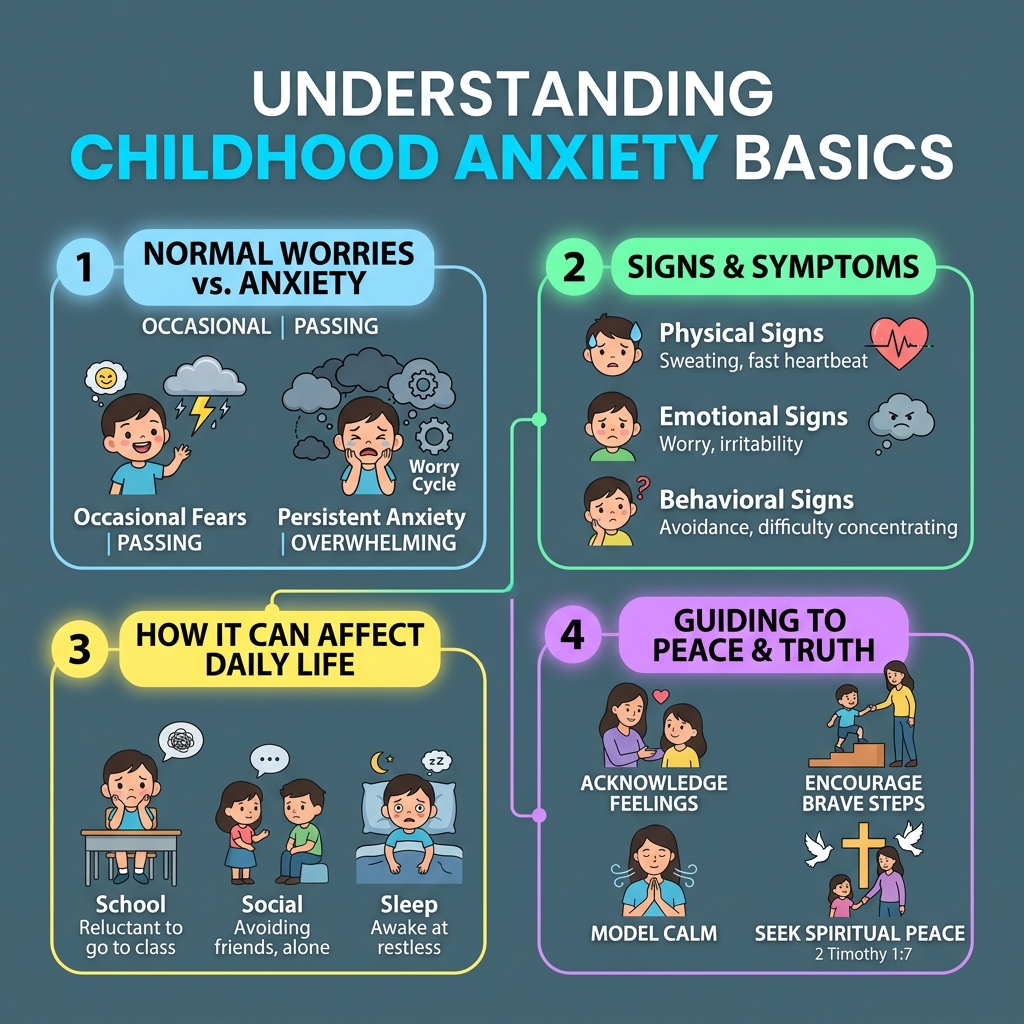

In our walk with the Lord, we often remind our children of the powerful promise found in 2 Timothy 1:7: “For God hath not given us the spirit of fear; but of power, and of love, and of a sound mind.” While fear is a natural human emotion designed to protect us from immediate danger, anxiety is often a “false alarm” that keeps the mind in a state of constant unrest.
It is important for us as parents in the Evanston and North Shore area to distinguish between normal developmental worries and clinical anxiety. For example, babies as young as eight or nine months naturally experience separation anxiety—this is a healthy sign of attachment! Preschoolers may fear the dark or loud storms. However, when these fears become paralyzing or prevent a child from attending school or playing with friends, we must look closer.
Signs of greater than normal anxiety often include a child being perpetually tense or having an almost constant need for adult reassurance. You might notice physical symptoms that seem unrelated to illness, such as frequent stomach aches, nausea, or headaches, particularly on Sunday nights or before a big test. Behavioral changes, such as sudden irritability or avoidance patterns, are also common “red flags.”
| Healthy Caution | Paralyzing Anxiety |
|---|---|
| Nervous before a first piano recital | Refusing to attend lessons for weeks |
| Asking for a hug before school | Crying and clinging to a parent’s leg daily |
| Avoiding a growling dog | Refusing to walk down any street where a dog might be |
| Studying hard because of a test | Being unable to sleep or eat due to “what ifs” |
Identifying Symptoms Across Age Groups
Anxiety doesn’t look the same in a toddler as it does in a teenager. In younger children, you might see “toddler clinginess,” bedwetting, or night waking. Preschoolers often develop specific phobias of animals, insects, or costumed characters.
As children reach school age, anxiety often shifts toward perfectionism—the fear of making a single mistake on a worksheet. You may notice physical restlessness or trouble focusing, which can sometimes be mistaken for ADHD. For adolescents, social anxiety becomes more prevalent. They may avoid social gatherings or become hyper-focused on how others perceive them. Across all ages, sleep disturbances are a major indicator that a child’s mind is not at rest.
The Root Causes of Worry
What causes our children to feel this way? It is usually a combination of factors. Biological factors, such as brain chemistry and genetics, play a role; some children are simply born with a more sensitive “alarm system.” Environmental triggers like a family move, academic pressure, or a distressing event can also spark persistent worry.
We must also recognize the role of spiritual warfare and media influence. In an age of constant digital noise, children are exposed to “scary” news and worldly pressures that can overwhelm their spirits. As we seek to foster life transformation, we must be mindful of the atmosphere we allow into our homes.
Biblical Strategies for Helping Kids with Anxiety
When the storms of worry rise, we turn to the Word of God as our anchor. Philippians 4:6-7 instructs us: “Be careful for nothing; but in every thing by prayer and supplication with thanksgiving let your requests be made known unto God. And the peace of God, which passeth all understanding, shall keep your hearts and minds through Christ Jesus.”
One of the most effective ways of Helping kids with anxiety is teaching them to “talk back” to their fears with Scripture. Memorizing verses together provides them with a “sword of the Spirit” to use when they feel alone. At Kidz4Life, we focus on building this spiritual foundation in a safe, multicultural environment where kids learn that they are never alone because Jesus is always with them.
Practical relaxation is also vital. We can teach our children Belly breathing techniques to help calm their physical bodies. By breathing in slowly (smelling the flower) and exhaling (blowing out the candle), they can signal to their nervous system that they are safe. This physical regulation, combined with a consistent prayer routine, helps create a sense of predictability and peace.
Practical Tools for Daily Peace
Beyond prayer and breathing, there are several “tools” you can keep in your parenting toolkit:
- The Worry Box: Have your child write or draw their worries and place them in a box. Tell them, “We are giving these to Jesus for now so you don’t have to carry them.”
- The 5-4-3-2-1 Grounding Method: When a child is panicking, ask them to name 5 things they see, 4 things they can touch, 3 things they hear, 2 things they can smell, and 1 thing they can taste.
- Calming Music and Devotionals: Filling the home with worship music or reading a Bible story before bed can displace anxious thoughts with truths about God’s love. Our Bible Study resources can help you find age-appropriate truths to share.
Breaking the Cycle of Avoidance
A common mistake we make is allowing children to avoid the things that scare them. While this provides short-term relief, it actually reinforces the anxiety in the long run. Instead, we use a “habituation curve”—the scientific and practical reality that the more we face a (safe) fear, the less power it has over us.
We should encourage “brave behavior” through gentle exposure. If a child is scared of Sunday school, we might start by just visiting the classroom when it’s empty, then staying for ten minutes, then a full session. Use positive reinforcement and celebrate every “brave step” they take. Validating their feelings (“I see you are feeling scared”) without empowering the fear (“…and I know you are brave enough to try”) is the balance we strive for.
Modeling Peace: How Parents Lead by Example
Children are like sponges; they soak up the emotional atmosphere of the home. If we are constantly “fretting” and worried, they will likely mirror that behavior. Modeling healthy coping mechanisms is one of the greatest gifts we can give. This means narrating our own process: “I’m feeling a little stressed about work, so I’m going to take a minute to pray and breathe deeply.”
At The Life Church of Evanston, we believe that parents shouldn’t carry these burdens alone. Our Life Groups provide a space for parents to find their own support and spiritual authority. When you Join a Life Group, you connect with a community that can pray with you and share testimonies of how God has delivered their own families from fear.
Avoiding Common Parental Pitfalls
Even with the best intentions, we can fall into traps that worsen anxiety.
- Leading Questions: Instead of asking, “Are you worried about the big test?” try “How are you feeling about school today?” This avoids planting “worry seeds.”
- Overprotection: If we “rescue” our kids from every uncomfortable situation, they never learn that they can handle discomfort.
- Shortening Anticipation: If your child is nervous about a doctor’s visit, don’t talk about it for three days straight. Keep the “anticipatory period” short to prevent the worry from building up.
- Contingency Planning: Help them think through “what if” scenarios. If they are afraid you’ll be late for pickup, make a plan: “If I’m not there, you go to the coach, and he will call me.”
Creating a Sanctuary at Home
Your home should be a refuge from the world. Establishing predictable routines (mealtimes, bedtimes, and prayer times) provides a sense of security. Set healthy media boundaries to limit “scary” content that can trigger a child’s imagination. Most importantly, fill your home with words of affirmation and joyful worship. When we praise Jesus, the atmosphere shifts, and fear has no place to stay.
When to Seek Professional Support for Helping Kids with Anxiety
While many worries can be managed with prayer and home strategies, there are times when professional help is a wise and necessary step. If your child’s symptoms persist for more than four weeks or cause significant functional impairment—such as refusing to go to school, withdrawing from friends, or experiencing physical illness from stress—it is time to consult a professional.
Evidence-based treatments for anxiety, such as Cognitive Behavioral Therapy (CBT), are highly effective. CBT helps children identify “bully thoughts” and replace them with realistic truths. As a church, we also offer pastoral guidance to help navigate these seasons. For older children, our Teen Bible Study Ultimate Guide can be a great resource to help them find their own identity in Christ.
Integrating Faith and Clinical Care
Seeking therapy does not mean you lack faith; rather, it means you are using every tool God has provided for your child’s healing. Christian counseling can be a wonderful way to integrate a biblical worldview with clinical expertise. We view mental health through a holistic lens—caring for the spirit, soul, and body. Your church community is here to provide the spiritual support that complements professional care.
Preparing Your Child for Therapy
If you decide to seek therapy, frame it positively. You might tell your child, “We’re going to see a ‘feelings coach’ who helps kids learn how to be the boss of their worries.” Normalize the process and let them know that everyone needs help sometimes. Set collaborative goals and reward their bravery for attending sessions. Consistency is key to seeing lasting change.
Frequently Asked Questions about Helping Kids with Anxiety
What is the best Bible verse for Helping kids with anxiety?
While many verses are comforting, Isaiah 41:10 is a pillar of strength: “Fear thou not; for I am with thee: be not dismayed; for I am thy God: I will strengthen thee; yea, I will help thee; yea, I will uphold thee with the right hand of my righteousness.” Reminding a child that the Creator of the universe is personally holding their hand can be incredibly grounding.
How do I know if my child’s worry requires professional Helping kids with anxiety?
Look for the “Three Ps”: Persistence (does it last more than a few weeks?), Pervasiveness (does it happen at home, school, and church?), and Precipitous Change (is it a major shift from their normal personality?). If the anxiety stops them from doing things they used to love, it’s time to talk to your pediatrician or a counselor.
Can attending a youth ministry help with social anxiety?
Absolutely! A healthy Youth Ministry provides a low-pressure environment where kids are accepted for who they are. In our multicultural community, children learn that their value comes from being a child of God, which can greatly reduce the pressure they feel to “perform” for their peers.
Conclusion
Helping kids with anxiety is a journey of patience, prayer, and practical action. At The Life Church of Evanston, we have seen the transformational power of the Spirit of God turn fearful hearts into courageous ones. Whether you are in Evanston or the North Shore, we invite you to experience our welcoming, multicultural community.
Your child doesn’t have to be a slave to fear. Through Jesus Christ, they can find a peace that “passeth all understanding.” We are here to walk alongside you, offering a safe place for your children to grow and for you to find the strength you need.
