
Why Multi-Ethnic Churches Matter More Than Ever
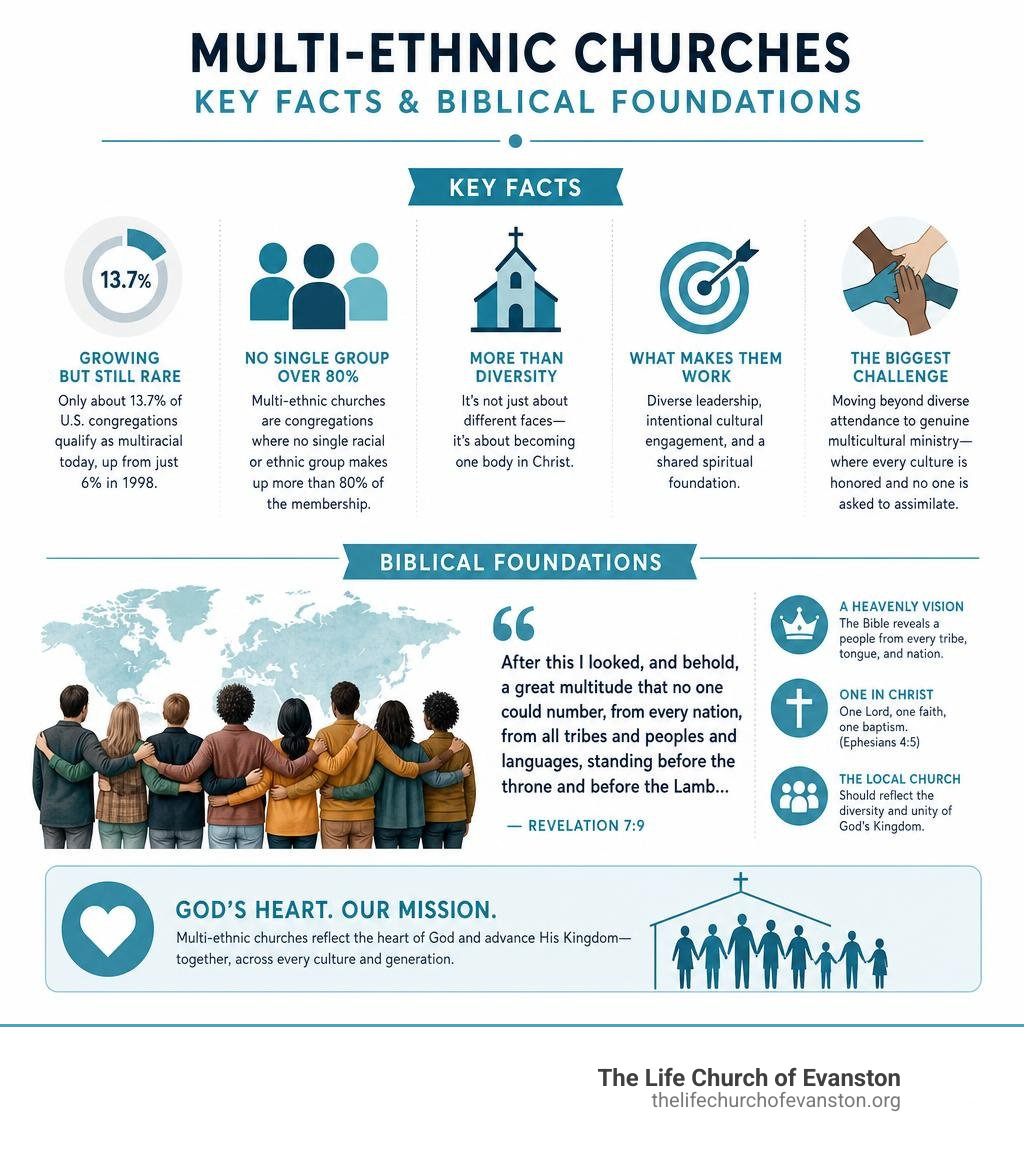
Multi-ethnic churches are congregations where no single racial or ethnic group makes up more than 80% of the membership — and they are reshaping what Christian community looks like across America and the world.
Here is a quick overview of what you need to know:
| Question | Quick Answer |
|---|---|
| What is a multi-ethnic church? | A congregation with meaningful diversity across racial and ethnic backgrounds, worshipping together as one body |
| How common are they? | Only about 13.7% of U.S. congregations qualify as multiracial today, up from just 6% in 1998 |
| What makes them work? | Diverse leadership, intentional cultural engagement, and a shared spiritual foundation |
| What is the biblical basis? | Scripture reveals a heavenly gathering of every tribe, tongue, and nation (Revelation 7:9) — the local church should reflect that reality |
| What is the biggest challenge? | Moving beyond diverse attendance to genuine multicultural ministry, where every culture is honored and no one is asked to assimilate into a dominant culture |
Despite growing diversity across North America, most churches remain deeply monocultural. Research shows that among Protestant congregations, only about 8% are genuinely multiracial. Yet the Bible paints a clear picture of what the church is meant to look like — a unified, Spirit-filled people drawn from every nation, gathered around one Lord, one faith, and one baptism (Ephesians 4:5).
The gap between that vision and today’s reality is significant. And it raises an important question: what does it actually take to build a church where people from every background feel genuinely seen, valued, and spiritually rooted?
That question is not just academic. For families looking for a welcoming, Bible-centered community — one where their children can grow in faith alongside people who look different from them — it is deeply personal.
I’m Anthony LoCascio, pastor of The Life Church of Evanston (UPCI) and founder of Transformation Bible Institute, and my ministry has been built around the conviction that multi-ethnic churches are not a modern trend but a biblical mandate rooted in the Acts 2 outpouring. In this guide, I will walk you through what the Scriptures teach, what the research reveals, and what practical steps any congregation can take to move toward genuine multicultural ministry.
Simple guide to multi ethnic churches terms:
The Biblical Blueprint for Multi Ethnic Churches
To understand the spiritual foundation of multi ethnic churches, we must return to the absolute authority of the Holy Scriptures. The Bible outlines a beautiful progression from the early pages of Genesis to the glorious vision of Revelation. God’s ultimate plan has always been to gather a single, unified body of believers out of every nation, kindred, and tongue.
On the Day of Pentecost, as recorded in Acts 2, this divine plan was set into motion. The Holy Ghost fell upon a diverse group of people gathered in Jerusalem from “every nation under heaven” (Acts 2:5). They did not merely observe a miracle; they experienced the transformational power of the Spirit of God and became the first global, multicultural congregation.
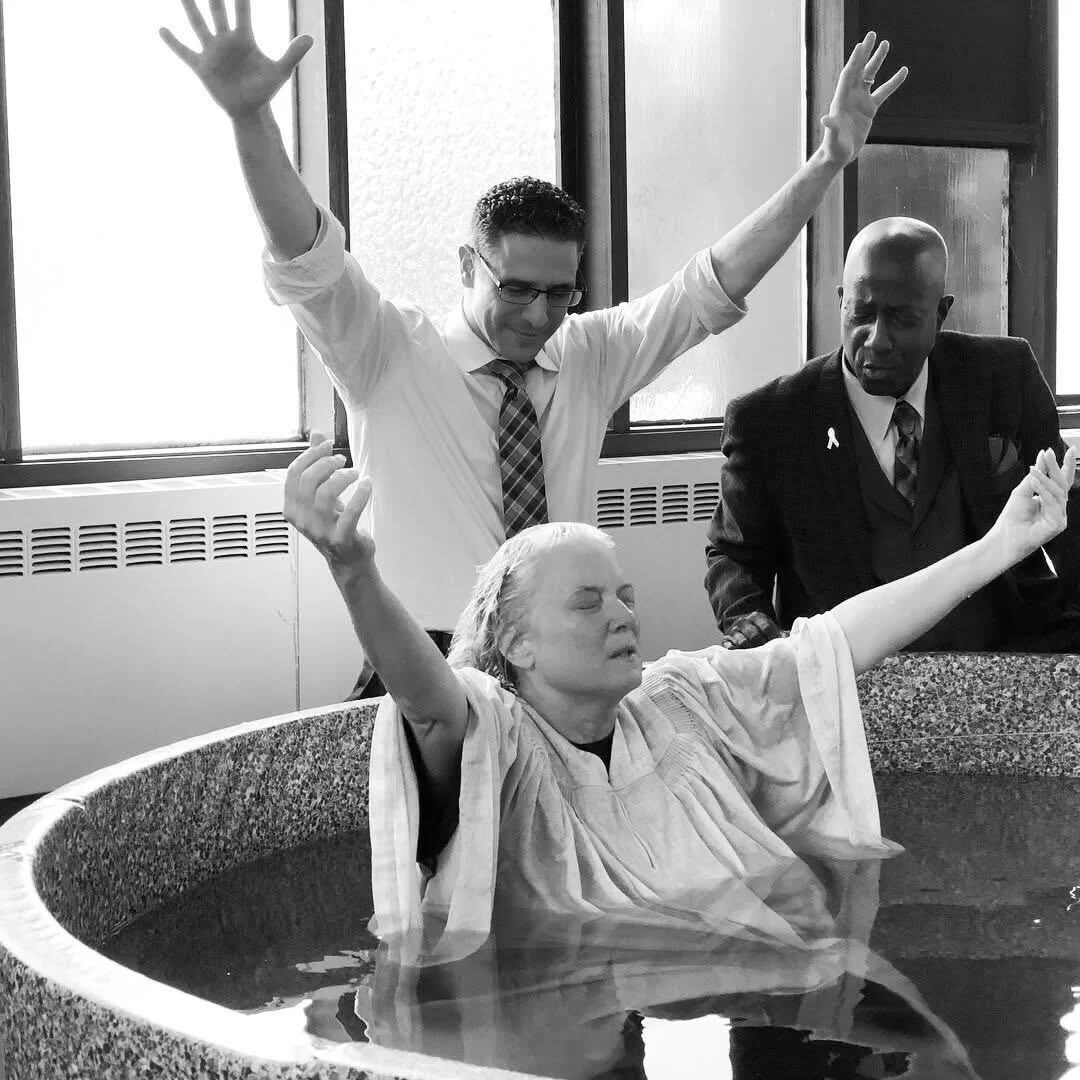
This historical and spiritual reality demonstrates that the church was designed to be multicultural from its very birth. When we plant and cultivate multi ethnic churches, we are participating in God’s global mission. As we seek to replicate this heavenly design in our local communities, we look to the eternal truth of God’s Word to guide our steps, which is beautifully explored in theological frameworks such as Reflecting Heavenly Multicultural Reality in a Tokyo Church Planting Project.
The Oneness of God and the Gathering of Nations
At the heart of our worship is the absolute Oneness of God. Scripture declares in the Shema: “Hear, O Israel: The Lord our God is one Lord” (Deuteronomy 6:4). This fundamental truth is the cornerstone of Christian unity. Because there is only one God, there is only one spiritual family. As the Apostle Paul wrote, there is “one Lord, one faith, one baptism” (Ephesians 4:5).
This theological truth directly dismantles the barriers of human division. We do not worship different gods, nor do we access the Creator through different spiritual pathways. Every human being is created in the image of God, and every believer is brought into the same spiritual covenant. The Oneness of God demands a unified church. In a world fractured by racial, political, and cultural divisions, the local church stands as a powerful witness to the global harvest when it gathers diverse peoples under the banner of the one true God, Jesus Christ.
The Acts 2:38 Message as the Foundation for Multi Ethnic Churches
True spiritual unity cannot be manufactured through social programs or human cleverness. It requires a shared, supernatural experience. On the Day of Pentecost, when the diverse crowd asked, “Men and brethren, what shall we do?” the Apostle Peter provided the definitive, unchanging blueprint for salvation:
“Repent, and be baptized every one of you in the name of Jesus Christ for the remission of sins, and ye shall receive the gift of the Holy Ghost.” (Acts 2:38)
This three-fold plan of salvation is the ultimate equalizer for all cultures:
- Repentance: Every person, regardless of their cultural background or heritage, must turn away from sin and surrender completely to Jesus Christ.
- Water Baptism: Every believer must be baptized by full immersion in water, explicitly in the name of Jesus Christ for the remission of sins. This common baptism washes away our past and joins us together in His name.
- The Gift of the Holy Ghost: Every believer must receive the infilling of the Holy Ghost, evidenced by speaking in other tongues as the Spirit gives utterance.
When the Holy Ghost fills a believer, it transcends human language and cultural boundaries. The Spirit provides the supernatural love and humility required to sustain a diverse spiritual family. The Acts 2:38 message is not just a denominational doctrine; it is the biblical foundation that makes true multicultural unity possible.
Distinguishing Multi-Ethnic Attendance from True Multicultural Ministry
It is entirely possible for a church to have a diverse crowd on a Sunday morning without being a truly Multicultural Church. To understand how congregations develop, we must examine the differences between three primary models of how diverse groups interact: isolation, assimilation, and integration.
The outcomes of these models are vastly different:
| Model | Description | Congregational Outcome |
|---|---|---|
| Isolation | Culturally diverse groups meet in the same building or area but remain completely separate, maintaining their own language and cultural ministries with zero crossover. | Zero unity. The church remains divided along ethnic lines, missing the opportunity to build a shared spiritual family. |
| Assimilation | Diverse individuals attend the church but are expected to conform entirely to the dominant culture’s worship style, leadership habits, and social norms. | Cultural suppression. Minority members feel tolerated but not truly valued, which often leads to spiritual fatigue and attrition. |
| True Multicultural Ministry | Multiple cultural heritages are intentionally recognized, celebrated, and integrated into leadership, worship, and community life. | Spiritual unity and growth. Believers from all backgrounds participate fully, sharing decision-making power and ownership. |
The Pitfalls of Cultural Assimilation in the Local Church
Many well-meaning multi ethnic churches fall into the trap of cultural assimilation. In this scenario, a church may boast a diverse congregation, but the power structures, leadership, and worship styles remain entirely controlled by the host or dominant culture.
When minoritized cultures are forced to assimilate, their unique cultural expressions and heritages are suppressed. This dynamic can lead to deep frustration. Believers are subtly or overtly told that their cultural heritage is a barrier to spiritual maturity, or that they must adopt the cultural habits of the majority to be considered for leadership.
For example, historical congregations in the Evanston and North Shore IL areas, such as North Shore Baptist Church, have had to navigate these complex cultural dynamics over decades of shifting demographics. When a church insists on maintaining traditional, monocultural habits without adapting to its changing community, it risks alienating the very people it is called to reach. True biblical unity does not require the erasure of our God-given cultural identities; rather, it invites us to bring our unique heritages to the feet of Jesus Christ.
Moving Toward True Multicultural Engagement
To move from simple multi-ethnic attendance to genuine multicultural engagement, a congregation must cultivate mutual respect and active honor. This transition requires a conscious decision to de-center the dominant culture and make room for others.
It means we do not merely invite diverse people to sit in our pews; we invite them to help shape our community. True engagement means that different cultural styles of prayer, testimonies, and fellowship are welcomed and woven into the fabric of the church. When we value and accommodate multiple cultural contexts, we create an environment where everyone feels at home, a process that is highly beneficial for families seeking a spiritual home, as discussed in Beyond the Search Bar: Finding a Multicultural Church That Fits.
Overcoming Challenges and Generational Shifts in Diverse Congregations
Building and sustaining a multicultural congregation is a beautiful calling, but it is not without its difficulties. As demographic realities shift in areas like Evanston IL and the North Shore IL, churches must be prepared to navigate unique generational and social challenges.
Navigating Generational Differences and Identity
One of the most complex dynamics in multi ethnic churches is the gap between first-generation immigrants and their second- or third-generation children. While first-generation believers often find comfort in preserving their native language and traditional worship styles, their children — born and raised in the local community — often navigate a bicultural identity.
These younger generations face unique challenges:
- Language Preferences: Second-generation youth typically prefer English for worship and deep conversation, even if they speak their parents’ native language at home.
- Cultural Transmission: Families often experience tension as parents try to pass down traditional values while youth try to find their place in a modern, diverse society.
- Mental Health and Identity: Young people in bicultural environments face intense pressure to conform to multiple sets of expectations, making holistic, Bible-based youth discipleship and mental health support essential.
Our youth ministries, such as our Kidz4Life and youth discipleship programs, must be intentionally designed to support these young people. We must help them discover their primary identity in Jesus Christ while honoring their rich cultural heritage, a theme we explore deeply in Family Faith and Fellowship: An Inside Look at Multicultural Family Church.
Addressing Cultural Crises with the Gospel of Jesus Christ
When social crises, racial tensions, or instances of injustice dominate the news cycle, the local church cannot remain silent or indifferent. However, our response must always be driven by the Word of God rather than secular philosophies or political ideologies.
Scripture is explicitly clear that racism and partiality are sins. The Apostle James wrote: “But if ye have respect to persons, ye commit sin, and are convinced of the law as transgressors” (James 2:9).
When we address these issues from the pulpit, we must do so with biblical clarity and pastoral love. We must:
- Preach the Whole Counsel of God: Declare that every human being is created in God’s image and that hatred, bias, and division are direct violations of His law.
- Practice Biblical Peacemaking: Create safe spaces within our Life Groups for members to share their experiences, pray together, and seek reconciliation.
- Keep the Focus on the Gospel: The ultimate solution to human division is the transforming power of the Holy Ghost. Only a heart changed by Jesus Christ can truly love without prejudice.
Practical Steps for Cultivating Leadership and Worship
A healthy multicultural church must reflect its diversity in two critical areas: leadership and worship. When visitors enter our doors, they should immediately see a reflection of the global kingdom of God.
Developing Diverse Leadership in Multi Ethnic Churches
A diverse congregation will rarely survive without a diverse leadership team. If the platform and the decision-making meetings are entirely monocultural, minority members will quickly realize they are visitors rather than owners of the house.
To develop qualified, diverse leaders, we must focus on biblical standards of character and competence:
- The Fivefold Ministry: We must recognize that God pours out spiritual gifts — apostles, prophets, evangelists, pastors, and teachers (Ephesians 4:11) — across all cultural groups.
- Intentional Training: We must establish clear, accessible pathways for leadership development, such as our training programs, ensuring that everyone has the opportunity to grow in their calling.
- Overcoming Systemic Bias: We must actively reject the temptation to select leaders based on cultural familiarity or personal connections, choosing instead to elevate those who are full of the Holy Ghost and wisdom.
We invite you to connect with our ministry teams to see how we actively raise up leaders from every background by visiting our Connect page.
Adapting Worship and Preaching for a Diverse Congregation
Worship is the heartbeat of the church, and it must reflect the diverse voices of our congregation. This requires intentionality, flexibility, and a willingness to step outside our comfort zones.
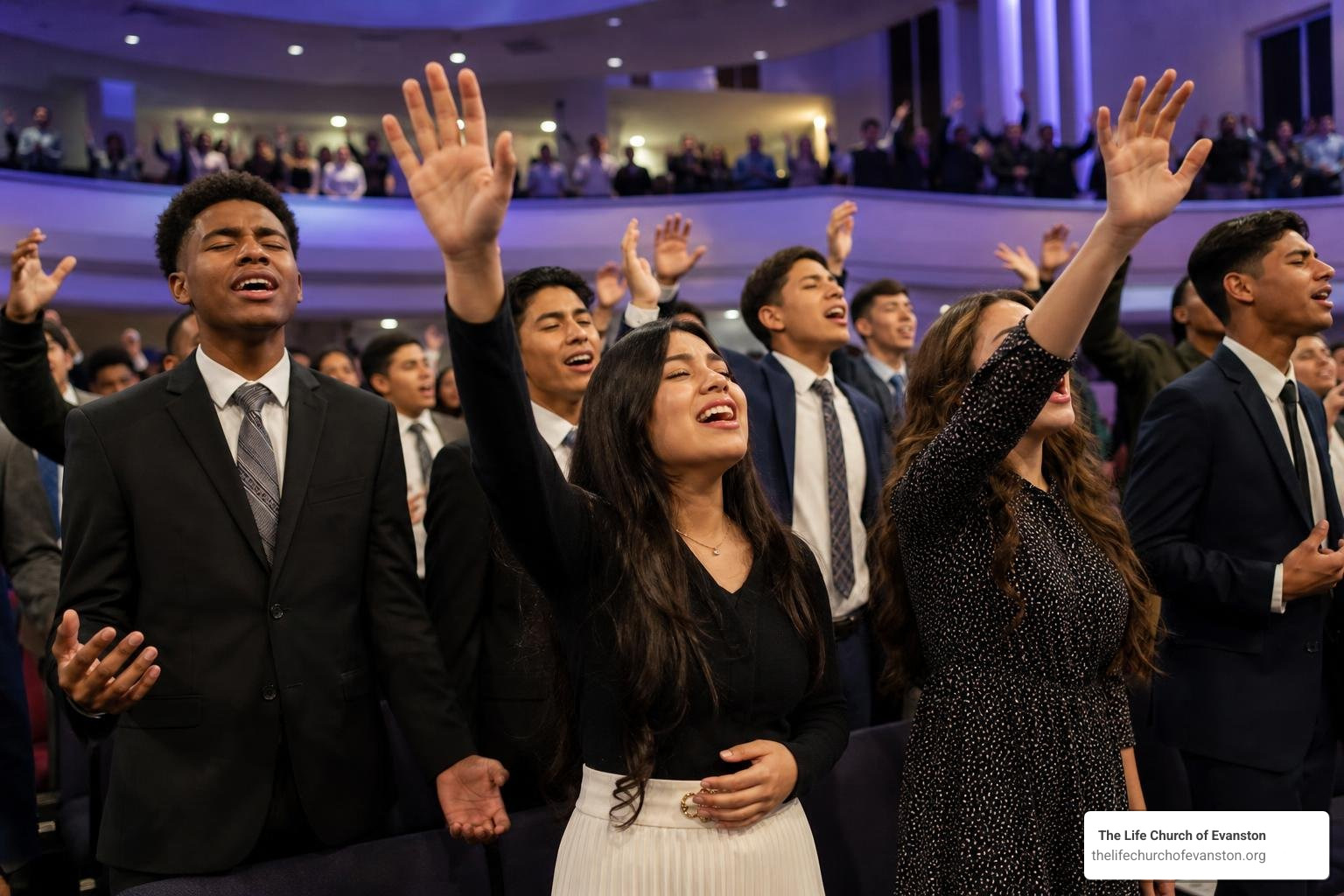
- Expressive Praise: In alignment with our Apostolic heritage, we encourage vibrant, expressive worship — lifting our hands, clapping, and singing with all our might. This passionate style of worship transcends cultural boundaries and unites us in one spirit.
- Multilingual Elements: Incorporating scriptures, prayers, or song verses in different languages during our main services helps every member feel seen and valued.
- Doctrinal Purity and Strategic Preaching: While our methods and worship styles may adapt, our message remains completely unchanged. Every sermon must be rooted in the absolute authority of the Bible, exalting the name of Jesus Christ and presenting the clear plan of salvation.
Frequently Asked Questions about Multicultural Churches
What is the difference between a multi-ethnic and a multicultural church?
A multi-ethnic church refers primarily to the demographic mix of the congregation, meaning that multiple ethnic groups are present in the pews. A multicultural church goes a step further by actively engaging, accommodating, and honoring those different cultural contexts in its leadership, worship styles, and community life, rather than expecting everyone to assimilate into a single dominant culture.
How does Oneness Pentecostal theology foster unity among diverse cultures?
Oneness theology teaches that there is only One God (Jesus Christ) and one spiritual plan of salvation for all humanity (Acts 2:38). Because we all share the exact same spiritual birth — repentance, water baptism in Jesus’ name, and the infilling of the Holy Ghost — our shared identity in Christ completely supersedes our cultural differences, creating a deep, supernatural unity that human efforts cannot replicate.
Why is leadership diversity essential for sustaining a multicultural congregation?
Leadership diversity provides visible representation, which builds trust and a sense of belonging for visitors and members from different backgrounds. It also ensures that diverse perspectives are included in decision-making, helping the church avoid cultural blind spots and fostering a healthier, more balanced spiritual family.
Conclusion
The pursuit of a truly multicultural church is not a matter of political correctness or social engineering; it is a direct response to the call of Jesus Christ. As we look forward to the ultimate gathering of every nation, tribe, and tongue around the throne of God, we are called to build local congregations that serve as a preview of that heavenly reality.
Through the transformational power of the Holy Spirit, we can overcome the historical divisions of our world and stand united as one body. If you are looking for a welcoming, Bible-centered community in the Evanston IL or North Shore IL area — a place where you can experience the power of God, grow as a disciple through our Life Groups, and raise your family in a loving, multicultural environment — we invite you to join us.
To learn more about our beliefs, our history, and our heart for our community, please visit our About Us page. We look forward to welcoming you to The Life Church of Evanston.