
Why the Multicultural Church Matters Now More Than Ever
A multicultural church is a congregation that intentionally brings together people from diverse ethnic and cultural backgroundsnot just as attendees, but as fully empowered participants who shape the community’s worship, leadership, and mission. It goes beyond simply having diversity in the pews to actively celebrating, integrating, and being transformed by multiple cultures.
When the Apostle Paul wrote “there is no longer Jew or Greek” (Galatians 3:28), he wasn’t erasing cultural identity. He was pointing to the profound truth that the church is called to be a preview of heaven, where people “from every nation, tribe, people and language” gather around God’s throne (Revelation 7:9).
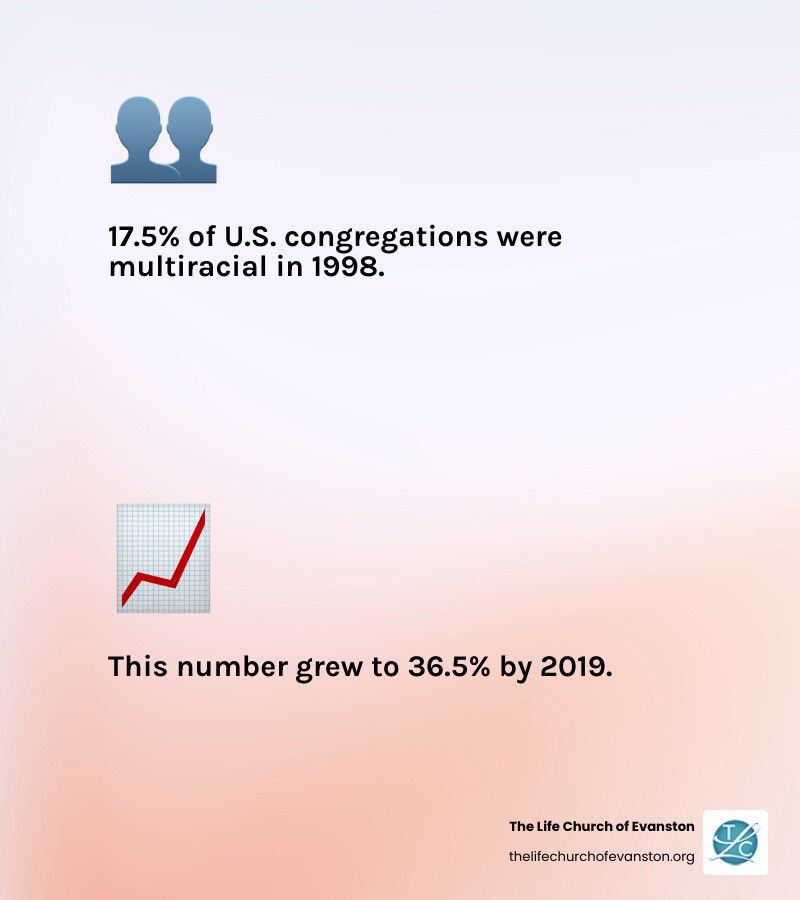
The growth of diverse churches is undeniable. According to the National Congregations Study, the percentage of U.S. congregations considered multiracial (where no single group is more than 80% of attendees) nearly doubled in two decades, rising from 17.5% in 1998 to 36.5% by 2019. Churches are waking up to a divine vision that’s been in Scripture all along.
Yet becoming truly multicultural is harder than it looks. Many churches have diversity in attendance but still operate with the cultural preferences of one dominant group. Real change requires more than good intentions; it demands prayer, intentionality, and a willingness to be uncomfortable.
This guide will walk you through the theological foundations, practical steps, and real challenges of becoming a multicultural church. Whether you’re a leader casting a vision or a member wondering what this means for your community, you’ll find biblical wisdom and actionable strategies here.
The Divine Blueprint: Theological and Missional Foundations
The vision of a multicultural church didn’t start with modern demographics; it began in the heart of God. When Jesus gave the Great Commission to “go and make disciples of all nations” (Matthew 28:19), the Greek word for “nations” was ethnos—meaning every distinct people group and culture. God’s mission has always been to reach people in their own cultural context.
We see this beautifully illustrated at Pentecost in Acts 2. When the Holy Spirit fell, people from all over the known world heard the Gospel proclaimed in their own languages. God chose to honor their diverse tongues, previewing what the Church was meant to become. The Gospel itself is fundamentally about reconciliation. In Ephesians 2:14-16, Paul writes that Christ “has destroyed the barrier, the dividing wall of hostility… to create in himself one new humanity.” This reveals God’s ultimate plan to break down every human-made division through the cross.
When our churches reflect this diverse, barrier-breaking love, we become a powerful witness to a world fractured by tribalism. A truly multicultural church demonstrates that God’s power can unite people separated by culture, language, and background. This vision rests on solid biblical foundations: it aligns with the Great Commission, reflects the reconciling nature of the Gospel, shows the world the “new humanity” found in Christ, and gives us a glimpse of the heavenly worship described in Revelation 7:9, where people “from every nation, tribe, people and language” praise God together.
This isn’t just a future promise—it’s a present calling. A multicultural church serves as both a sign and an instrument of God’s kingdom, demonstrating His reconciliation and justice right here, right now. Our local churches should offer a preview of that heavenly worship, where every voice and culture contributes to a beautiful mosaic of praise. This is unity in diversity, not uniformity.
As our communities in Evanston and the North Shore become more diverse, we have an opportunity to live out the Great Commission in our own backyard. Dr. Martin Luther King Jr. said the church should be a “thermostat” that changes society, not a “thermometer” that merely records it. His observation that Sunday morning remains one of the most segregated hours in America still challenges us today. A multicultural church actively influences culture with kingdom values—unity, justice, and reconciliation. If we fail to accept diversity, we risk becoming irrelevant. But when we get it right, we offer living proof that reconciliation is possible. Explore these themes in our Bible Study
Defining the Diverse Church: Characteristics and Distinctions
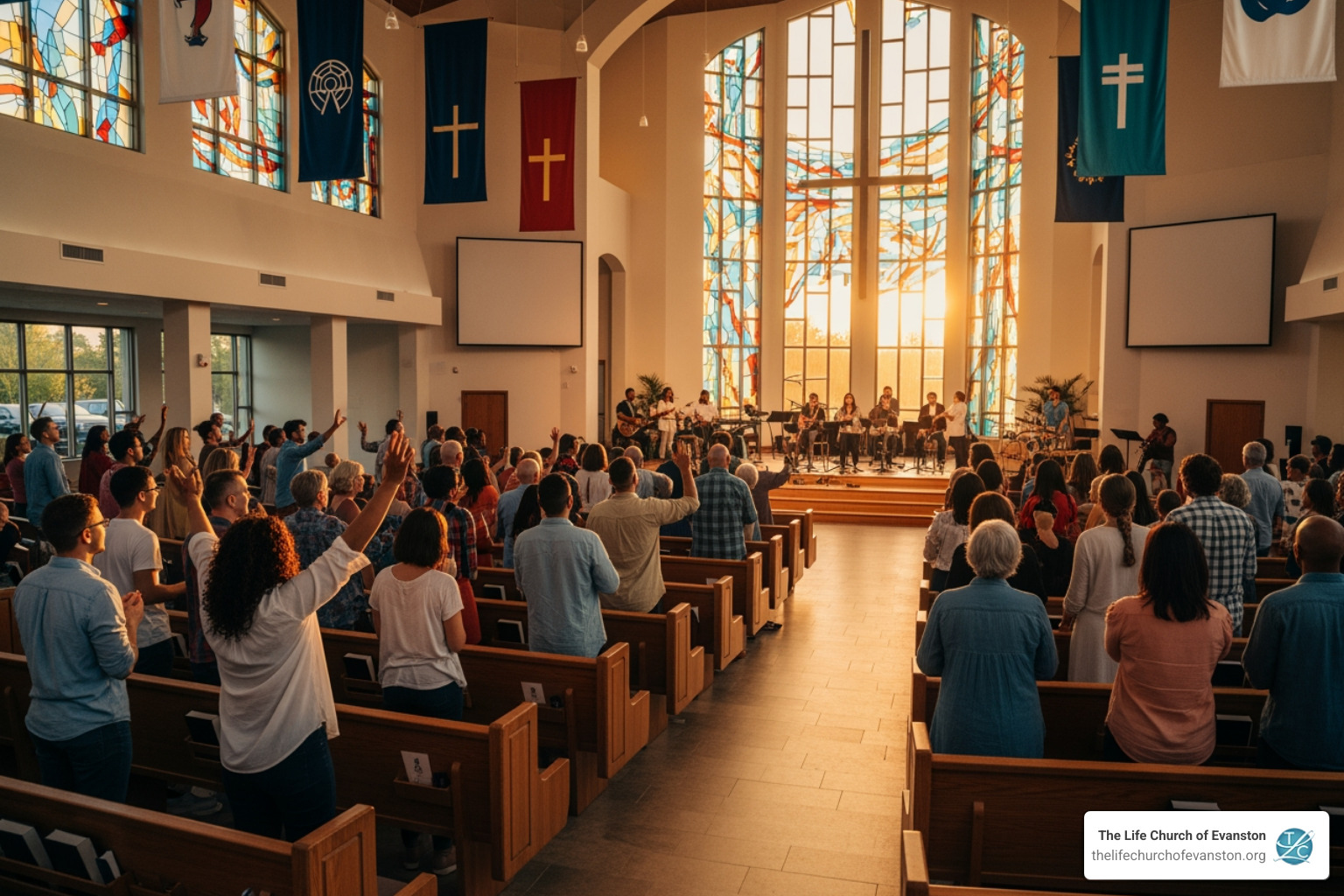
What does it really mean to be a multicultural church? It’s more than having people from different backgrounds in the same pews. A truly multicultural congregation is welcoming, relational, adaptive, and intentional. Think of it this way: diversity is being invited to the party, but inclusion is being asked to help plan it.
Multiethnic vs. Multicultural: What’s the Difference?
You might hear these terms used interchangeably, but the distinctions are important. A multiethnic church has people from different ethnic backgrounds attending together. It’s a good start, but the worship style and leadership often still reflect one dominant group.
A multicultural church goes deeper. Here, multiple cultures aren’t just present—they’re actively celebrated and woven into the fabric of church life, shaping worship, leadership, and decision-making.
An intercultural church goes even further. This is where mutual change happens. Members intentionally learn from each other’s cultures, build genuine relationships, and share power equitably. Instead of expecting newcomers to adopt the existing culture, everyone grows and changes together. The goal isn’t just representation; it’s mutual change.
Key Characteristics of a Healthy Multicultural Church
A healthy multicultural church isn’t just diverse on the surface. It is marked by diverse leadership that reflects the congregation, ensuring multiple perspectives shape decisions. Shared decision-making is essential, moving beyond tokenism to true empowerment where all voices are heard and valued. In worship and ministry, the church intentionally celebrates multiple cultures through music, languages, and traditions, enriching everyone’s understanding of God. More on our ministries.
Crucially, this is not about assimilation. People are encouraged to sustain their cultural identities while learning from others, because unity doesn’t mean uniformity. Empowering all members means creating genuine opportunities for everyone to use their gifts, regardless of cultural background. None of this happens by accident. It requires intentionality—deliberate planning and persistent effort to build bridges and dismantle barriers. Finally, a multicultural church actively works for justice, addressing issues of power and privilege both within its walls and in the wider community.
| Feature | Multiethnic Church | Multicultural Church | Intercultural Church |
|---|---|---|---|
| Demographics | Diverse attendees (various ethnicities) | Diverse attendees (various ethnicities) | Diverse attendees (various ethnicities) |
| Cultural Integration | Minimal; dominant culture often prevails | Active celebration and accommodation of multiple cultures | Mutual learning, adaptation, and change |
| Worship Style | Often reflects dominant culture, possibly some token elements | Incorporates diverse cultural expressions | Dynamic, evolving, co-created by diverse cultures |
| Leadership | May be monocultural, or token diversity | Increasingly diverse representation | Shared power, equitable participation, diverse leadership |
| Goal | Diversity in attendance | Cultural affirmation and integration | Mutual change, deep relationship, justice-seeking |
| Power Dynamics | Often maintains existing power structures | Works to include diverse voices | Actively addresses and redistributes power |
| Identity | Assimilation often expected for minorities | Celebrates and sustains individual cultural identities | Sustains identities while fostering new shared identity |
Building the Bridge: Practical Steps to Becoming a Multicultural Church
Becoming a multicultural church is a journey that requires intentionality, humility, and a willingness to step outside our comfort zones. This change is achievable through prayer, radical hospitality, and embracing the discomfort that often comes with real growth. It’s like building a bridge: you need a clear vision, committed leadership, and intentional practices.
The Crucial Role of Leadership
If leadership isn’t fully invested, a multicultural church simply won’t happen. Leaders must cast a clear vision that connects multiculturalism to the Gospel, communicating it consistently in sermons and strategic planning. They must also model humility, demonstrating a willingness to learn from other cultures and acknowledge their own biases. When leaders admit mistakes, it gives the congregation permission to do the same.
Perhaps the most tangible step is diversifying staff and leadership teams. A sobering statistic reveals that 76 percent of multiracial congregations in the U.S. are still pastored by white ministers. To truly empower all members, we must intentionally recruit, mentor, and promote leaders from various backgrounds. This includes sharing the pulpit with speakers from different ethnic backgrounds to model reconciliation and expose the congregation to diverse perspectives. Finally, leaders must shepherd with grace, listening to concerns and addressing fears with compassion as the church steers the discomfort of change.
Cultivating an Inclusive Worship Experience
Worship is a powerful place to express and celebrate multiculturalism. An inclusive service might include reciting the Lord’s Prayer in multiple languages simultaneously or reading scripture in English and Spanish. Bilingual resources like worship folders or screen projections make services more accessible. Diverse musical styles also enrich our corporate worship, blending gospel hymns, Latin praise songs, and contemporary music from artists of different backgrounds. Our Music Ministry actively seeks to create this kind of dynamic worship. Our Music Ministry. Incorporating cultural arts like dance, visual art, or storytelling from different traditions can also create a more vibrant and representative experience. The essentials remain prayer, intentionality, hospitality, and acknowledging the discomfort that signals growth.
Fostering Community and Belonging
Beyond Sunday service, a multicultural church cultivates deep relationships. Shared meals are a powerful tool; organizing potlucks where people bring dishes from their cultural heritage creates natural opportunities for connection. Welcoming spaces are also key, which can mean multilingual signage or decor that reflects various cultures. Cross-cultural discipleship happens best in smaller settings like our Life Groups, where diverse individuals can share their stories and grow together. This is where true cross-cultural competence develops—not through programs, but through relationships. Join a Life Group. We must also create safe spaces for dialogue about cultural differences and practice intentional outreach to our neighbors, inviting them into the life of the church with sensitivity and skill.
Navigating the Challenges: Pitfalls and Pathways to Unity
The journey to becoming a multicultural church is rewarding, but it’s also challenging. It requires us to sit with discomfort, resist the pull of our personal preferences, and extend grace freely. One of the biggest pitfalls is having diversity in the pews but allowing one dominant culture to call all the shots. This is sometimes called “multicolorism”—diversity in color but not in culture. True multiculturalism demands deeper, structural change.

Addressing Power, Privilege, and Injustice
Authentic multicultural ministry requires uncomfortable conversations about power, privilege, and historical injustices. Many churches, even diverse ones, operate under “white normativity,” where the dominant cultural practices and worship styles are treated as the default. Confronting this means asking hard questions about why we do things the way we do.
We must also acknowledge historical injustices honestly. The church hasn’t always been on the right side of history regarding racism. This involves creating safe spaces for difficult conversations and being open to vulnerability. Moving beyond tokenism is another crucial step. It’s not enough to have a few people of color in leadership if they don’t have genuine power. True equity means examining how resources are shared and actively working to redress power imbalances. Often, the most important thing we can do is listen to the experiences of those from minority cultures before we lead.
Balancing Cultural Identity with Unity in Christ
One of the beautiful tensions in a multicultural church is balancing individual cultural identity with our shared unity in Christ. The goal isn’t cultural uniformity. Our primary identity is in Christ, and this is what unifies us when cultural preferences might otherwise divide us.
People should be able to sustain their own cultural identities while appreciating those of others. This means encouraging authentic expressions of heritage, not expecting conformity. When we incorporate elements from other cultures, we must do so respectfully, with guidance from people of that culture, to honor their heritage rather than appropriate it. Unity without uniformity is the goal. True unity in Christ flourishes in the rich mix of diverse cultures, languages, and traditions, all woven together by the Holy Spirit. The journey is challenging and requires grace, but it’s a necessary one that reflects God’s heart and offers a powerful witness to a divided world.
Frequently Asked Questions about the Multicultural Church
As churches wrestle with what it means to accept diversity, certain questions arise. These are honest questions that deserve thoughtful answers.
How is a multicultural church different from a multiethnic one?
Think of it this way: a multiethnic church has diversity in the pews, with people from different racial backgrounds present. A multicultural church goes further—it is intentionally shaped by those different cultures. In a multicultural church, diverse expressions influence everything from worship music to leadership decisions. It’s the difference between being a guest and being part of the family.
Why is becoming a multicultural church often so difficult?
This work is hard because it challenges our personal preferences about music, communication, and how we “do church.” More deeply, becoming a multicultural church requires confronting uncomfortable realities about power and privilege. It means the dominant culture must be willing to share decision-making authority and make space for others. It’s about deep, structural change, not just adding a little diversity to an existing system. That kind of change requires humility, patience, and a lot of grace.
What is the first practical step our church can take?
Start with prayer and honest conversation among your leadership. Ask God for humble hearts and a clear vision for your community.
Next, study your neighborhood. Look at the demographics of Evanston and the North Shore. Who lives around you? What cultures are represented? Then, ask the hard questions: Does our church reflect this diversity? If not, what visible or invisible barriers might be keeping people from feeling welcome? This initial season of prayer and awareness creates the foundation for all future steps toward becoming a multicultural church.
Conclusion
Building a multicultural church isn’t about being culturally relevant; it’s about responding to a biblical call that echoes from the Great Commission to the vision of heaven in Revelation. It’s about reflecting God’s heart for all people and demonstrating the Gospel’s reconciling power in a world desperate for unity.
The journey requires us to move beyond our comfort zones, confront uncomfortable truths, and commit to deep, lasting change. It asks us to choose unity in Christ over cultural preferences and to celebrate diversity rather than demand uniformity.
When we accept this journey, our worship becomes richer, our understanding of God deepens, and our witness to the community grows stronger. We become a living preview of heaven, where people from every nation, tribe, and tongue gather in praise.
At The Life Church of Evanston, we are committed to this path. We don’t have it all figured out, but we are dedicated to fostering a welcoming, multicultural church where everyone can grow in their faith and contribute their unique gifts. We believe that by building bridges across cultures, we offer a glimpse of God’s kingdom to our neighbors in Evanston and the North Shore. The world is watching. The choice is ours, and the time is now. Learn more about our vision and values.
