
Why Kids Church Programs Shape Faith for a Lifetime
Kids church programs are structured ministry environments where children learn biblical truth, experience worship, and build a lasting foundation of faith. If you’re looking for the best options available in 2026, here’s a quick overview:
Top Kids Church Programs at a Glance:
| Program | Best For | Teaching Style |
|---|---|---|
| Word Aflame (PPH) | Apostolic/Oneness doctrine | Topical & doctrinal |
| The Gospel Project | Christ-centered narrative | Chronological |
| GO! Curriculum | High-energy engagement | Chronological/interactive |
| Wonder Ink | Identity & family connection | 4-part discipleship framework |
| Hyfi | Digital-native kids | Relational & media-driven |
| Elevate Kids | Creative themed learning | Topical/thematic |
| Breakthrough | Neurodiverse children | Inclusive & adaptive |
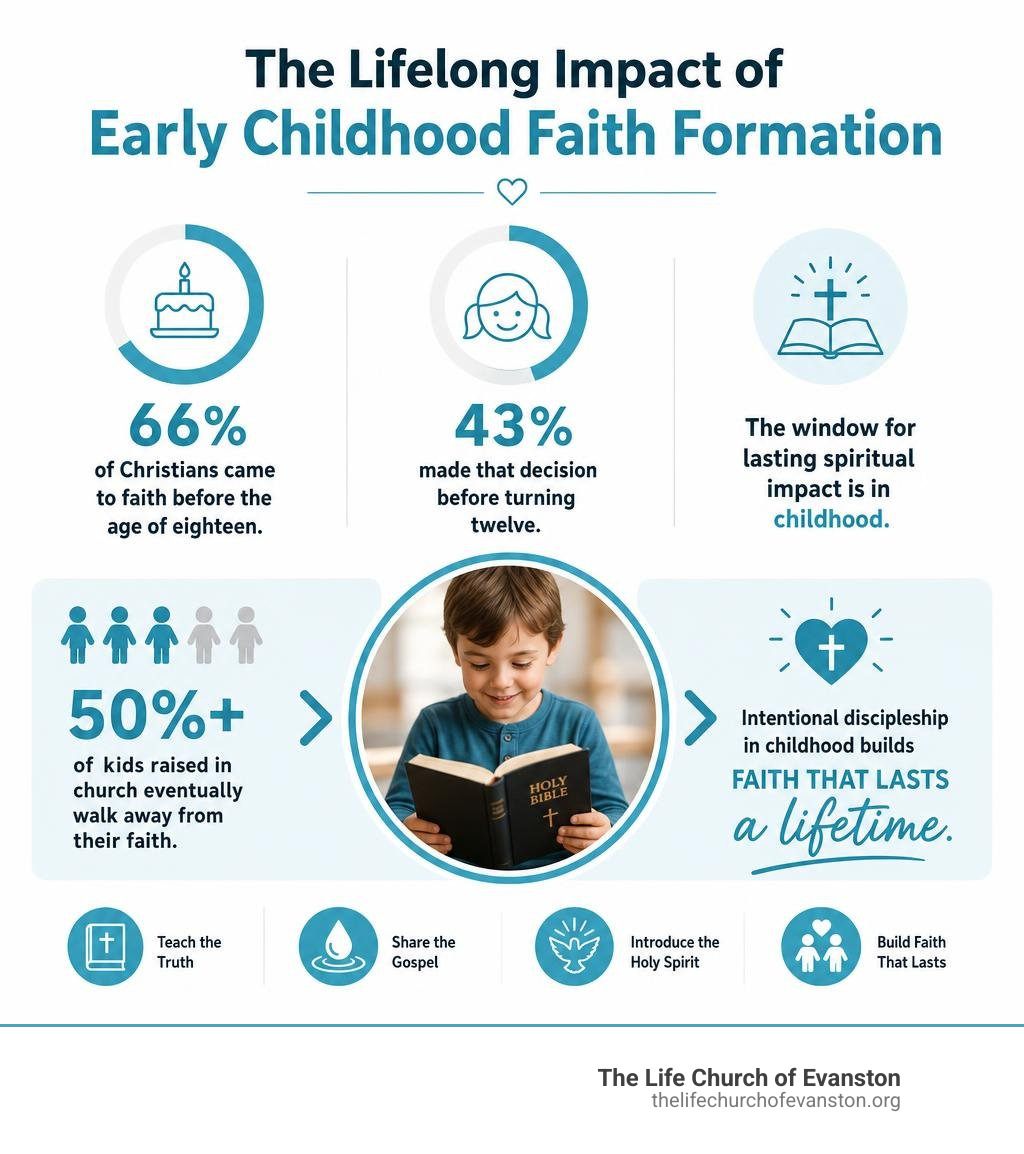
The numbers make the stakes clear. Two-thirds of Christians came to faith before the age of eighteen. Forty-three percent made that decision before turning twelve. The window for lasting spiritual impact is not in adulthood — it’s right now, in childhood.
Yet over 50% of kids raised in church eventually walk away from their faith. That’s not a small problem. It means the quality, depth, and intentionality of a kids church program matters enormously — not just for Sunday mornings, but for eternity.
The goal isn’t just to keep children entertained while parents attend service. It’s to disciple them in the Word of God, introduce them to the saving power of Jesus Christ through repentance, baptism in Jesus’ name, and the infilling of the Holy Ghost — and build a faith strong enough to last a lifetime.
I’m Anthony LoCascio, pastor of The Life Church of Evanston (UPCI), and I’ve spent years building and refining kids church programs grounded in Apostolic doctrine, relational ministry, and Spirit-led discipleship. In this guide, I’ll walk you through the seven best options available today so you can choose what’s right for your church and your children.
Kids church programs terms made easy:
Essential Pillars of Effective Kids Church Programs
To build a kids ministry that truly transforms lives, we must look beyond basic childcare. A successful program is built upon clear, uncompromised spiritual pillars.

Uncompromising Scriptural Authority and Apostolic Doctrine
The absolute foundation of any children’s program must be the infallible Word of God. We do not teach the Bible as a collection of fictional moral stories, but as absolute truth. For us, this means instilling the cornerstone doctrines of Scripture:
- The Oneness of God: Teaching children that there is only one God who revealed Himself fully in the person of Jesus Christ, rejecting any pluralistic or Trinitarian divisions.
- The Acts 2:38 Plan of Salvation: Helping kids understand the beautiful, complete experience of salvation—repentance, water baptism by full immersion in the name of Jesus Christ for the remission of sins, and receiving the gift of the Holy Ghost, evidenced by speaking in other tongues as the Spirit gives utterance.
Shepherds, Not Chaperones
There is a massive difference between a chaperone and a shepherd. A chaperone merely supervises children to keep them safe and quiet. A shepherd actively guides, prays for, and disciples them. In our classrooms, we train our volunteers to be spiritual shepherding forces. This is why we focus heavily on Sunday School Superstars: Your Go-To for Kids Bible Lessons, equipping teachers to connect relationally with every child, praying for them individually every single week.
The 7 Best Kids Church Curriculums and Programs Compared
Choosing the right curriculum is one of the most critical decisions a children’s ministry director will make. Below, we compare the top options available in 2026 to help you find the perfect fit for your context, theological needs, and resources.
To help your church navigate these choices, we highly recommend looking at resources like Uncover Truth: Christ-Centered Bible Studies for Kids to supplement your core teaching materials. Let’s dive into the detailed breakdown of each program.
1. Word Aflame (Pentecostal Publishing House)
For churches committed to a pure Apostolic, Oneness Pentecostal world view, Word Aflame curriculum is the gold standard. Published by the Pentecostal Publishing House, this curriculum is specifically designed to align with traditional United Pentecostal Church International (UPCI) doctrines.
- Doctrinal Alignment: It is completely centered on the Oneness of God and the Acts 2:38 plan of salvation. You will never have to edit out Trinitarian language or correct theological errors.
- Holiness and Pentecostal Heritage: Word Aflame teaches the beauty of Christian holiness, both inward and outward, and instills a deep appreciation for our Pentecostal heritage.
- Age-Appropriate Application: From toddlers to preteens, lessons are structured to help kids experience the real infilling of the Holy Ghost and learn to walk in Spirit-filled victory.
Utilizing Word Aflame ensures your children are built up in the same faith taught in the main sanctuary, preparing them seamlessly for 5 of the Best Faith-Based Youth Groups for Kids as they grow.
2. The Gospel Project
The Gospel Project is a highly popular, chronological curriculum that takes children on a multi-year journey through the entire Bible, showing how every single story points to God’s redemptive plan.
- Chronological Narrative: Instead of jumping around topically, kids study the Bible from Genesis to Revelation. This helps them understand the historical context of Scripture and see the Bible as one unified story.
- Redemptive History: Every lesson connects the Old Testament prophecies to their ultimate fulfillment in the New Testament.
- Apostolic Adaptation: While highly structured and Christ-centered, Apostolic teachers using this curriculum will want to actively adapt the application points to explicitly emphasize the Oneness of God and water baptism exclusively in the name of Jesus Christ.
3. GO! Curriculum
If your kids ministry struggles with keeping children engaged, GO! Curriculum offers a brilliant, interactive approach designed to make Sunday morning the highlight of a child’s week.
- Interactive Storytelling: GO! gets kids out of their seats. The lessons utilize playful, high-energy storytelling that requires active participation.
- Chronological Structure: Despite its high energy and silliness, it maintains a deep chronological focus, ensuring children learn how God is at the center of every biblical event.
- Relational Depth: The curriculum provides excellent small group materials that help volunteers transition from fun games to deep, Spirit-led conversations about faith and the power of the Holy Ghost.
4. Wonder Ink
Wonder Ink is built around the core truth that every child is created to be known, loved, and led by God. It focuses heavily on developing a strong spiritual identity in children.
- Discipleship Framework: Lessons are structured around a four-part flow: Spark curiosity, explore Scripture (belief), connect to personal life (faith), and respond in worship (identity).
- Parental Partnership: Wonder Ink features an incredible parent portal and weekly take-home resources, ensuring that faith formation continues long after Sunday morning.
- Absolute Scriptural Authority: The scope and sequence systematically tackle tough biblical questions, reinforcing the authority of the Word of God for modern, tech-savvy kids.
5. Hyfi
In an era where children are “digital natives,” Hyfi provides a digital-first, highly relational curriculum designed to reach media-literate kids who are bombarded by worldly influences.
- Relational Connection: Hyfi shifts the focus away from passive viewing to active, small-group relationships, making it incredibly effective for welcoming unchurched families.
- 12 Core Biblical Concepts: It systematically teaches absolute biblical truths across core categories like God, Jesus, the Holy Spirit, salvation, and the church.
- Modern Media Integration: It provides clean, modern digital resources that help teachers present deep theological concepts without losing the attention of today’s generation.
6. Elevate Kids
Elevate Kids utilizes highly creative, themed “base packs” to teach children deep spiritual truths through concepts they already love, such as science, sports, and outdoor adventures.
- Creative Themes: Whether it is “Adventures in Science” or “Allaso Ranch,” the themes keep kids excited to attend church.
- Sports Analogies & Experiments: Lessons use physical experiments and sports analogies to make abstract spiritual concepts tangible.
- Strong Foundations: Despite the creative themes, the core lessons focus heavily on building a solid biblical foundation and teaching kids how to apply the Word of God to their daily lives.
7. Breakthrough (Special Needs Focus)
For a truly welcoming, multicultural church, accommodating neurodiverse children and those with special needs is not an afterthought—it is a mandate of Christian love. Breakthrough provides the framework to make this happen.
- Inclusion Models: It offers practical strategies to integrate children with special needs into the main classroom environment wherever possible.
- Sensory-Sensitive Classrooms: Breakthrough helps churches design physical spaces that minimize sensory overload, allowing every child to worship in peace.
- Heroes & Sidekicks: This model pairs a trained volunteer (a “Sidekick”) with a child (the “Hero”) to provide one-on-one support throughout the service.
If you are looking to support families navigating these unique challenges, pairing this program with resources like Calm the Storm: Guiding Your Anxious Child to Peace can make a world of difference.
Implementing Safety and Parent Partnerships
A great curriculum is only half the battle. To run a truly successful kids church program, we must guarantee physical safety and build a strong partnership with the home.
Bulletproof Safety Protocols
Parents will not hear the Gospel if they are worried about their child’s safety. Reputable local programs prioritize absolute security. Every church in the Evanston and North Shore IL area must implement:
- Federal Background Checks: Required for every single volunteer, without exception.
- Ministry Safe Certification: Regular training to ensure volunteers understand safety boundaries and child protection guidelines.
- Secure Check-In Systems: Utilizing digital check-in platforms that print unique, matching alpha-numeric codes for parents and children.
- Hallway Monitoring: Dedicated security personnel and cameras monitoring the kids’ spaces at all times.
For additional child-safety guidance, churches can review the CDC’s child abuse and neglect prevention resources as they build policies that protect children and support families.
For a deep dive into building these structures, explore Beyond the Basics: Building a Bulletproof Children’s Ministry Safety Program.
The 50/50 Parent Partnership
We only have children for a few hours a week on Sundays. Parents have them for dozens of hours at home. To combat the statistic that over 50% of kids walk away from their faith, we must partner with parents. We provide families with digital guides, weekly devotional tools, and scripture memory challenges so that the Apostolic truths taught on Sunday are reinforced at home every single day.
Choosing the Right Curriculum for Kids Church Programs
When selecting from these excellent kids church programs, keep these three key filters in mind:
- Theological Alignment: Ensure the curriculum either directly supports Apostolic Oneness doctrine, like Word Aflame, or can be easily adapted to focus on water baptism in Jesus’ name and the infilling of the Holy Ghost.
- Volunteer Capacity: Choose a program that matches your team’s strengths. If your volunteers are busy, choose a digital-first, easy-to-prepare curriculum like Hyfi or Wonder Ink.
- Budget and Scope: Consider the cost of digital licenses and physical materials, and look for a 2-year or 3-year scope and sequence that covers the entire Bible systematically.
For more information on how we structure our local church ministries, visit our Ministries page.
How Small Churches Can Launch Kids Church Programs
You do not need a massive budget or a 10,000-square-foot facility to run an effective kids ministry. If you are a small plant or a church with limited resources in the North Shore IL area, you can launch successfully by:
- Using Mixed-Age Classrooms: Use a flexible curriculum, like Wonder Ink or Word Aflame’s multi-age options, designed to teach children ages 3 to 12 together in a single room.
- Focusing on Relationships: A small church has a unique advantage: deep, personal connections. Sit at the kids’ table, pray for them one-on-one, and build real friendships with their families.
- Recruiting Wisely: Look for volunteers who love kids and are committed to prayer, even if they have never taught Sunday school before. Provide them with simple, pre-packaged lesson plans to build their confidence.
Frequently Asked Questions about Kids Church Programs
How do you teach complex Apostolic doctrines to children?
We use structured, simple tools like “Big Picture Questions and Answers” to break down deep biblical truths. By using simple language and repetitive, catechism-style Q&As, even young toddlers can learn that there is only one God whose name is Jesus, and that we must be baptized in His name and filled with His Spirit. As Deuteronomy 6:7 commands, we teach these truths naturally and consistently.
What is the difference between a chronological and a topical curriculum?
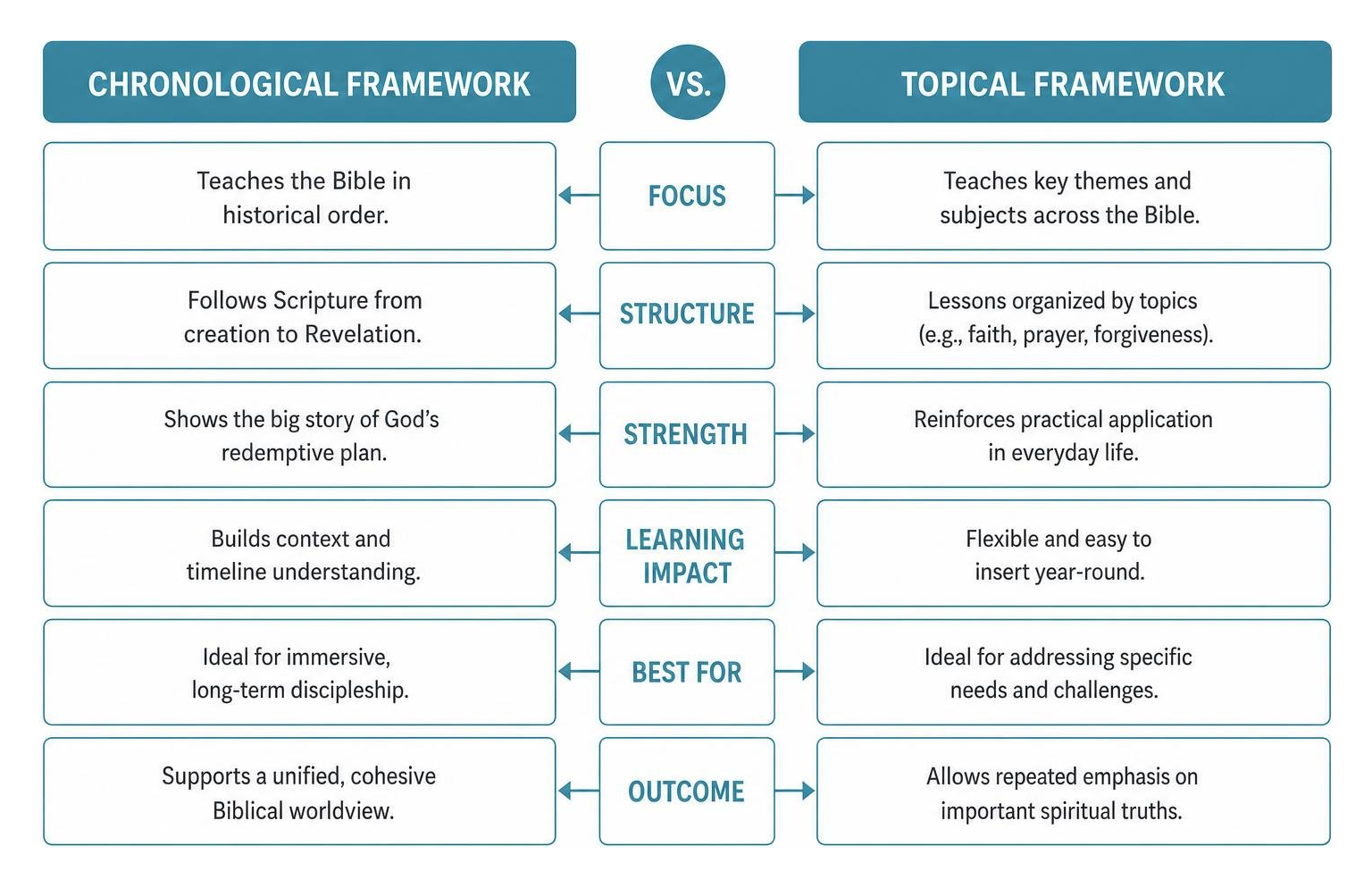
A chronological curriculum teaches the Bible in historical order from Genesis to Revelation, helping kids see the entire Bible as one unified story of God’s redemptive plan through Jesus Christ. A topical curriculum focuses on specific life issues or character traits (like honesty, patience, or fear) and pulls scriptures from various books of the Bible to teach those specific lessons.
How can we accommodate neurodiverse children in our classes?
We recommend implementing sensory-sensitive spaces, utilizing a one-on-one “buddy” system (like the Heroes & Sidekicks model), and training volunteers to recognize and gently support children with sensory sensitivities. Every child deserves to experience the love of Jesus on their developmental level.
Transform Lives with Kidz4Life
At The Life Church of Evanston, we believe that children are not just the church of tomorrow—they are a vital part of the church today. Through our Kidz4Life program, we are dedicated to providing a safe, joyful, multicultural, and Spirit-filled environment where children in Evanston, IL, and the surrounding North Shore communities can experience true life transformation.
We invite you to bring your family to experience a modern, Apostolic worship environment where your children will be loved, protected, and discipled in the absolute truth of God’s Word.
To learn more about our children’s ministry, plan a visit, or connect with our leadership team, visit our Kidz4Life page today!